
Senate Agenda Committee
This Committee consists of the Chair of the Senate who will act as chair of the Committee; the Secretary of the Senate who will be its secretary; and four additional Senators elected annually by the Senate from among the elected members of the Senate. The election of the Agenda Committee shall take place in the spring semester preceding the academic year of its incumbency. After the annual Senate elections have been completed, the existing Agenda Committee shall call the Senators-designate to an organizational meeting for the sole purpose of electing the Agenda Committee for the forthcoming academic year. The officers of the existing Senate shall conduct the organizational meeting. The new Agenda Committee and the new Senate shall succeed to their responsibilities on July 1 or earlier with the agreement of the prior year’s Agenda Committee.
Roles for the Senate Agenda Committee:
1) This Committee arranges the agenda for all Senate meetings, submits all assignments to standing committees, and establishes ad hoc committees for special studies whenever necessary. An item of business may, however, be brought before the Senate for discussion without approval of the Agenda Committee if (i) a motion to do so is made and seconded, in writing, directly to the presiding officer of the Senate, and (ii) a majority of the Senate agrees to the discussion. The item shall then become an item of business at the next succeeding meeting.
2) The Financial Affairs Committee and the Administrator Evaluation Oversight Committee shall be staffed and charged each year. The remaining committees shall be staffed and charged in most years, as needed. The Agenda Committee may also establish ad hoc committees at its discretion. Detailed descriptions of all Standing Committees are maintained in a separate document.
3) All Senate committees are responsible to the Agenda Committee and must submit their reports to it for review before presentation to the Senate. The Agenda Committee will have the right to return reports to committees if it feels it necessary.
4) The Agenda Committee also provides a regular channel for consultation and communication between the faculty and administration in matters of new programs, planning, and University policy by meeting regularly with the President and the Provost of the University.
5) The Agenda Committee shall be represented by one or more of its members on University-level committees that affect the academic endeavors of the University, including those dealing with issues such as financial planning and technology policy, and shall encourage the participation of other faculty members on these bodies.
6) The Agenda Committee meets at least once each year with the Academic Affairs Committee of the Board of Trustees to report on Senate actions and issues coming before the Senate, and to discuss matters of mutual concern. By mutual agreement, the committees may hold more frequent meetings.
7) At each Senate meeting the Agenda Committee shall present an oral or written report briefing the Senate on its activities.
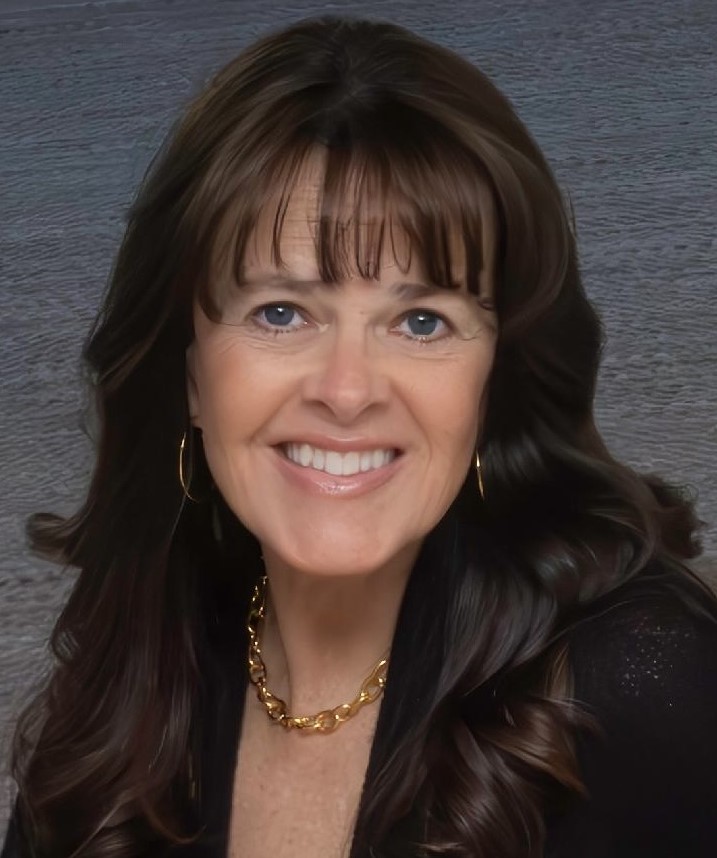
Dee Spencer
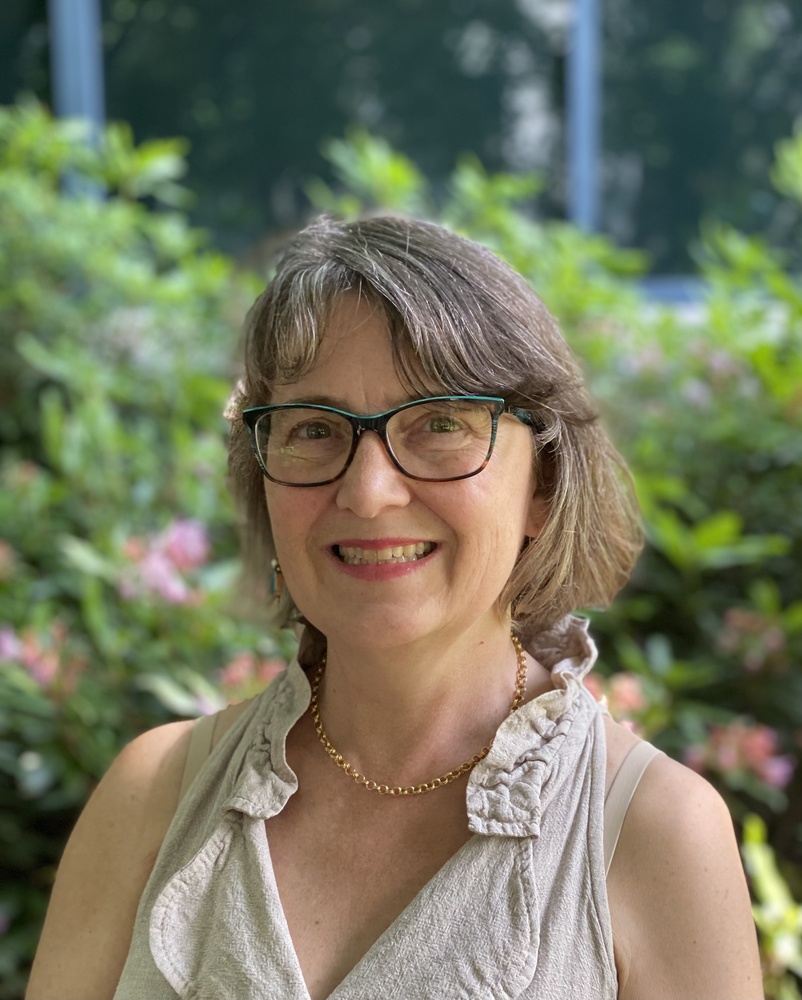
Cecelia Musselman
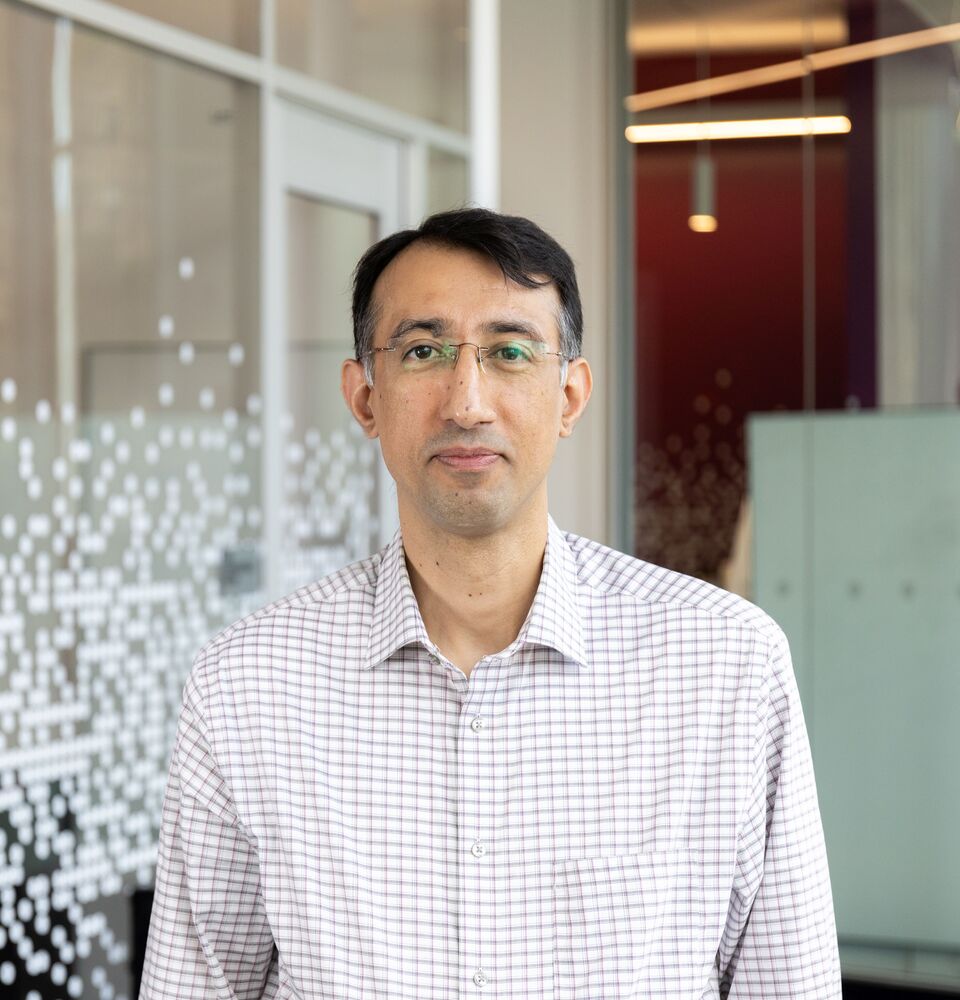
Adeel Bhutta
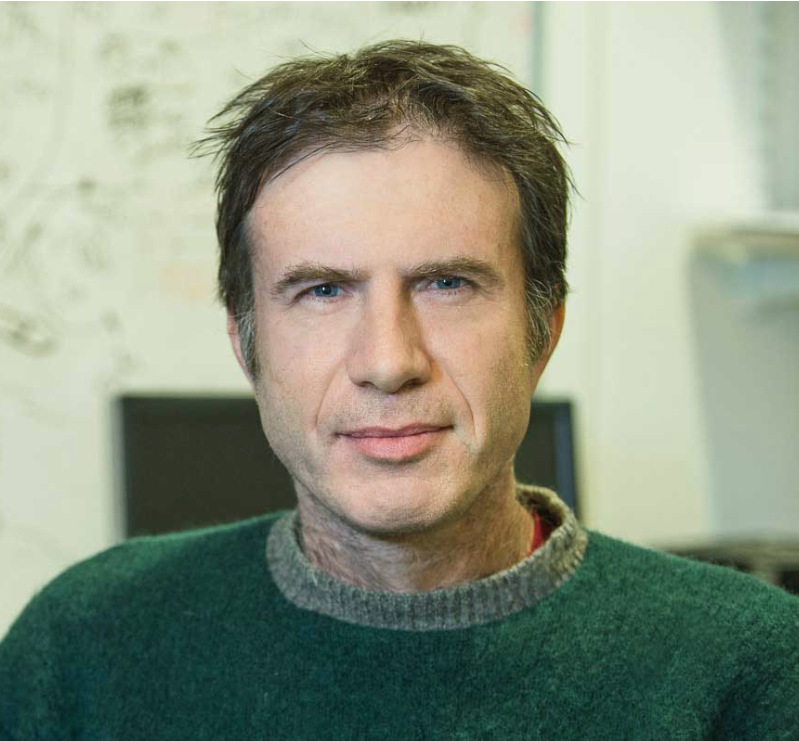
Peter Desnoyers

Krystal Hinerman
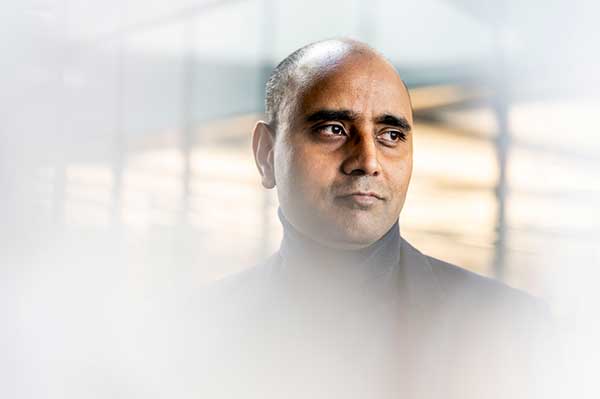
Aatmesh Shrivastava
Standing Committees
University Undergraduate Curriculum Committee (UUCC)
Background to the Charge
The UUCC is the University Undergraduate Curriculum Committee.
The UUCC shall be composed of one full-time faculty member from each college (chosen annually by each college’s curriculum committee), the Associate Dean in charge of undergraduate programs from each respective college, one faculty-member-at-large from the full-time faculty (appointed by the Senate Agenda Committee), one representative from the Student Government Association, and non-voting members from the Registrar’s Office and the Library. The Chair of the UUCC shall be the Provost, or their designee. The Chair will vote only in the event of a tie.
The UUCC is charged by the Faculty Senate to “consider and make recommendations to the Senate concerning any proposals for undergraduate curriculum changes.” The UUCC is “the Senate’s designee in considering interdepartmental and inter-college disputes arising from matters concerning courses or programs offered or proposed.”
Members
- Kirwin, Jennifer BCHS
- Hoppmann, Michael CAMD
- Jaeggli, Michael COE
- McElligott, Missy COS
- Clair, Erin CPS
- Mathras Fay, Daniele DMSB
- Green, Laura CSSH
- Wilson, Christo Khoury
- Hescott, Ben Khoury
- Bailey, Meryl Mills
- Bessette, Michael BCHS
- Zarow, Fox CAMD
- Gouldstone, Andrew COE
- George, Prasanth COS
- Rego, Michelle CPS
- Smith, Matthew CSSH
- Kurt, Didem DMSB
- Bhalerao, Rasika Khoury
- Averett, Maia Mills
- Ingemi, Jennifer Faculty At Large Appointee
- DiPasquale, Nicholas Student Member
- Dinani, Thandi GEO/Academic Integration & Planning
- Karen Merguerian, Gayane Library
Documents
University Graduate Curriculum Committee (UGCC)
Members
- Kirwin, Jennifer BCHS
- Harteveld, Casper CAMD
- Kamarthi, Sagar COE
- Tan, Tracy COS
- Bolick, Christopher CPS
- Klepper, Kate DMSB
- Ma, Jun CSSH
- Shesh, Amit Khoury
- Madison, Kristin SOL
- Bailey, Meryl Mills
- Markowski, Alycia BCHS
- Kim, Miso CAMD
- Su, Ming COE
- Lippner, Gabor COS
- Crystal, Annine CPS
- Dau, Luis DMSB
- Guidotti-Hernandez, Nicole CSSH
- Shesh, Amit Khoury
- Addison, Quisquella SOL
- Wang, Susan Mills
Documents
Faculty Development Committee (FDC)
Background to the Charge
This Committee is concerned with the rights and status of faculty personnel, including standards of tenure, promotion, and advancement for university faculty; and questions of professional development, academic freedom, and economic welfare.
Committee Charge
Charge 1:
Review FTNTTFC’s report from AY2025-26 (on charge 2) and continue research on career security option for faculty. including rolling contracts or contracts with security of employment policies at other institutions of higher education. Review report from FTNTTFC (2025-26).
In collaboration with the Provost’s Office, explore the feasibility of implementing contracts with long term security for associate or higher ranks at Northeastern University. Long term contracts with security of employment should be added as an extra option available to Colleges, apart from current.
If feasible, work with the Office of General Counsel to add the appropriate language to the Faculty Handbook in the Appointments, Promotions and Tenure module to provide an additional option for colleges/units to offer similar contracts {with security of employment} for the appointments or reappointments of FTNTT faculty.
Charge 2:
Review NOTICE OF NON-REAPPOINTMENT section of faculty handbook (under Appointments, Terms and Reappointments module). In collaboration with the Provost’s Office, explore the feasibility of implementing a longer notice period for non-appointments for associate or higher ranks.
Charge 3:
Review FDC committee’s report from AY2024-25 (on Charge 2) and FTNTTFC’s report from AY2025-26 (on charge 1) and compile a specific list of recommendations that may be shared with each Dean to improve unit-wide transparency and general faculty sentiments towards leadership decisions.
Members
- Avalon, Earlene CPS - Health Management and Health Sciences
- Liu, Xiaoping DMSB - Supply Chain and Information Management
- Maxwell, Jessica Co-chair - BCHS - Department of Movement and Rehabilitation Sciences
- Jamali, Safa COE - Mechanical and Industrial Engineering
- Oyelaran, Oyinda COS - Chemistry and Chemical Biology
- Deravi, Leila Co-chair - COS - Chemistry and Chemical Biology
Financial Affairs Committee (FAC)
Background to the Charge
According to the Faculty Senate Bylaws, the Financial Affairs Committee is a standing committee of the Faculty Senate charged with two general functions:
- This Committee is concerned with all questions related to financial affairs of the University, including institutional surveys, reviews and recommendations on budgeting, and financial policies of the University.
- This Committee shall prepare annual recommendations for the improvement of faculty salaries and fringe benefits.
Committee Charge
Charge 1: Faculty Merit/Equity & Financial Review
- Obtain current financial data from the Northeastern Office of University Finance, including Northeastern’s 2025-26 P&L and P&L-to-date.
- Meet with the Office of University Finance to understand fund allocation – how university funds are distributed among colleges, campuses, overhead/indirect costs, and other operating units.
- Meet with the Office of University Finance to understand faculty compression:
- Why faculty salaries have not kept pace with inflation
- How this compares to trends in administrative salary growth over the same period, using ProPublica data to establish those trends
- Feasibility study data for both faculty and administrative compensation
- Evaluate the Faculty Handbook’s merit and equity adjustment process using the information obtained above, and provide recommendations for improvement, including regarding the appeals process for both merit and equity decisions.
- Assess alignment with FAC Resolution #11 (2016), regarding Merit-Equity percentages: merit should be no less than 85% of any unit’s raise pool, with the remainder – no greater than 15% – going to equity.
Charge 2:
Examine whether 2024-25 Resolution #6 regarding retirement plan oversight has been implemented. If not, investigate why, and follow through with implementation, in collaboration with the Offices of Human Resources and University Finance.
Charge 3:
The 2026-2027 FAC is charged with identifying improvements already made in the Workday Finance system as well as further engaging with appropriate administrative offices to address outstanding faculty concerns as were identified in the 2025-2026 faculty survey, particularly regarding the Workday Finance system’s usability, payment processing delays, and account accessibility. The Committee should also recommend the best ways to communicate information about university financial decision-making and budget allocation to faculty.
Deliverable: A report with progress made to address identified concerns with Workday Finance, needed areas for improvement, and mechanisms for ongoing faculty input into financial systems and policy.
Members
- Sridhar, Srinivas COS - Physics
- Wertheim, Ed DMSB - Management & Organizational Development
- Copeland, Debra BCHS - Pharmacy and Health Systems Sciences
- McNabb, Joseph CPS - Graduate School of Education
- Erdogmus, Deniz COE - Electrical and Computer Engineering
- Bhalerao, Rasika Khoury
Administrator Evaluation Oversight Committee (AEOC)
Background to the Charge
- This committee oversees and receives for review evaluations of the Provost, academic deans and unit chairpersons. These evaluations are conducted on a regular schedule, typically every three years. The timetable for such evaluations shall be maintained by the Office of the Provost and shall be provided annually to the committee. Evaluations are performed in accordance with rules and procedures passed by the Faculty Senate on December 2, 2009 and approved by the Provost on December 11, 2009.
- This committee appoints the faculty members who serve on the administrator evaluation teams, develops and provides evaluation guidelines, materials, and regulations for the teams, sets evaluation schedules and deadlines for the reports, reviews the outcomes, and submits the reports to the Senate Agenda Committee for final review and appropriate distribution.
- Based on its reviews, the committee may also make recommendations to the Senate Agenda Committee, to the Provost, or to appropriate Vice Presidents on changes in procedures and/or evaluation instruments as deemed necessary.
Members
- Chang, Angela DMSB - Marketing
- De Ritis, Anthony CAMD - Music
- Dean, Michael
- Dionne, Brandon BCHS - Pharmacy and Health Systems Sciences
- Godoy-Carter, Veronica COS - Biology
- Goyal, Rangoli COS - Mathematics
- Koparan, Alper DMSB - Finance
- Madaparthi, Krishna CSSH - American Sign Language and Interpreting Education
- Mukasa, Constantine COE - First Year Engineering Program
- Nippins, Matthew BCHS - Physical Therapy, Human Movement, and Rehabilitation Sciences
- Paparounas, Demetra DMSB - Supply Chain and Information Management
- Piatt, Sadie COS - Chemistry and Chemical Biology
- Reilly, Joesph CPS - Master of Professional Studies
- Rizzo, Christie BCHS - Applied Psychology
- Roberts, LaToya BCHS - Speech-Language Pathology
- Sasani, Mehrdad COE - Civil and Environmental Engineering
- Vahabikashi, Amir COE - Bioengineering
- Yu, Shuishan CAMD - Architecture
- Zafar, Naeem DMSB - Entrepreneurship & Innovation
- Marchiori Pacheco, Larissa DMSB - International Business & Strategy
- Szelenyi, Balazs CPS
- Ries, Justin COS - Marine and Environmental Sciences
Academic Policy Committee (APC)
Background to the Charge
The Committee shall be concerned with questions of basic academic and research policy on an institutional level. Items to be dealt with should concern teaching loads, research procedures, academic requirements, classroom instruction, and all matters that pertain to classroom and laboratory activities.
The Committee shall also consider any academic matter or proposed program brought before the Senate that deals with relationships between the Colleges or involves more than one College.
Academic integrity is the focus for the 2026-2027 charges to this committee, covering a range of issues arising from the perceived rise of academic integrity violations at Northeastern and other US universities, in large part due to student use of LLMs and other AI tools.
Committee Charge
Charge 1:
Survey faculty, to determine (a) the extent to which faculty– perceive a recent increase in student cheating, and (b) adequacy of university procedures and resources for addressing cheating in their classes.
Charge 2:
If significant issues are identified in the survey, conduct additional faculty outreach to identify (a) patterns of student misconduct and (b) faculty methods of addressing it, with a special emphasis on online classes.
Charge 3:
Review college processes for addressing academic integrity (and possibly related academic standard-related policies) across the university.
Charge 4:
Review best practices for addressing academic integrity in 2026 which have been identified and/or publicized at other US institutions, meet with OSCCR to assess current NU processes and practices, and identify potential areas for NU improvement
Members
- Hagen, David CPS
- Ozbek, Yusuf COE - Software Engineering and Information Systems
- Lippner, Gabor COS - Department of Mathematics
- Cain, Victoria CSSH - History
- Kong, Lingfei DMSB - Finance
- Bishnoi, Priyanka Khoury
- Franko, Deb Ex Officio Member - Sr Vice Provost Academic Affairs
Belonging Committee
Background to the Charge
There has been substantial work done at the college level and through the Office of Belonging, and faculty have participated in belonging-related surveys for years. At the same time, many faculty have told us they aren’t sure how their input has translated into action, or whether a clear improvement cycle exists at all. This charge responds directly to that: rather than asking faculty for more input before they can see what’s being done with the input they’ve already given, the committee’s first task is to make the existing evaluation and improvement process visible — so faculty can see the work underway and engage with it meaningfully going forward. This work will be done in collaboration with the Office of Belonging.
Committee Charge
Charge 1:
Inventory existing Belonging evaluation and improvement plans.
Charge 2:
Gather Faculty priority feedback on existing improvement plans.
Members
- Au, Josephine BCHS - Applied Psychology
- Smyser, Bridget COE - Mechanical and Industrial Engineering
- Baskerville, Marla DMSB - Management and Organizational Development
- Sushmita, Shanu Khoury
- Senat, Junior BCHS - School of Nursing
- Cassano, Jennifer COS - Biotechnology
- Davis, Nicole Chair - BCHS - Applied Psychology
Faculty Handbook Committee
Background to the Charge
The Faculty Handbook Committee will review the faculty handbook on an annual basis, for internal inconsistencies, inconsistencies with other University documents, and for language or content that may need updating, identify and research areas of concern for future action, and identify and propose changes inclusive of recommendations for new resolutions.
Committee Charge
Charge 1:
Continue work on Charge #1 of 2025-26 Faculty Handbook Committee on updating the Grievance process and related sections of the Faculty Handbook.
The committee and SAC liaison will continue to finalize work from last year with the Office of the Provost and the Office of General Counsel to revise the grievance module of the handbook
Charge 2:
Clarify the language in the Faculty Handbook for the eligibility of faculty (with or without administrative responsibilities) to be elected as senators.
Charge 3:
Based on the Faculty Handbook Committee’s recommendations from AY2025-2026, begin the review of the following Faculty Handbook section in order to update it, based on current university/faculty needs: ‘Procedural Guidelines in the Appointment and Evaluation of University Administrators’. The committee should also review recent faculty senate resolutions related to administrator evaluations to guide their work.
Members
- Strange, Laney Khoury
- Rejtar, Marketa BCHS - School of Nursing
- Dransfield, Tim COS - Chemistry and Chemical Biology
- Flanagan, Josie COE - Cooperative Education
- Averett, Maia MCNU - Mathematics
- Venkatesan, Madhavi CSSH - Economics
Research Policy Oversight Committee (RPOC)
Background to the Charge
The Committee will review and assess the direction and implementation of the university’s research mission, advocate for its needs, review periodically and make recommendations on its research resources, infrastructures, and policies, taking care to include university IT (computing, networking) in this review. It will serve as a research “ombuds-body” to address structural impediments and faculty complaints, and work with the Provost, the Senior Vice President for Administration & Finance, the Senior Vice President for Institutional Advancement, and the President to insure the best possible environment for research and scholarship.
Committee Charge
Charge 1: Gather information on research-active faculty experience of the new systems and effects on the research lifecycle, via survey and direct outreach to colleges and faculty (e.g. via Senate representatives). Note that this effort should focus on ongoing operations, avoiding one-time transition issues which have already been resolved. Summarize the faculty-visible status of this transition, describing any high-return areas for potential improvement identified in this process, as well as any areas of significant faculty-visible improvements over the prior systems.
Charge 2: Survey faculty on the research and teaching effects of changes to ITS networking and related policies impacting faculty, with additional faculty outreach when needed to gather technical details of reported issues. Meet with ITS and develop recommendations for networking (e.g. port blocking) operations to ensure grant performance and access to NU-purchased software.
Charge 3: Charge: Recommend best practices for the allocation, use, and stewardship of overhead return funds distributed to individual PIs across the university.
Specifically, the committee should:
- Inventory current practice. Document how overhead return funds are currently managed across colleges – permissible uses, approval processes, and carry-forward or expiration rules.
- Recommend best practices. Propose specific best-practice guidance — covering allowable/disallowable uses, documentation and reporting expectations, timing of distributions, and mechanisms for faculty/chair input into how funds are used at the unit level.
The committee should ground its recommendations in (a) a review of published best practices and peer-institution policies, (b) a current-state inventory of overhead return practices across Northeastern’s colleges, and (c) targeted input from faculty and chairs.
Members
- Skinner, Owen COS - Chemistry and Chemical Biology
- Wamai, Richard CSSH - Cultures, Societies and Global Studies
- McGivney, Eileen CAMD - Art _ Design and Communication Studies
- Davaji, Ben COE - Electrical and Computer Engineering
- Soule, Deborah DMSB - Supply Chain & Information Management
- Devlin, John BCHS - Pharmacy and Health Systems Sciences
Ad Hoc Committees
Shared Governance Committee
Committee Charge
Charge 1:
Assess how shared governance currently functions across Northeastern by collecting faculty feedback and identifying strengths, gaps, and inconsistencies in governance practices across colleges and units.
Recommend institution-wide best practices that promote meaningful faculty participation in decision-making and strengthen collaboration between faculty and administration.
Charge 2:
Identify decision-making bodies that address policies, proposals, and matters of faculty concern.
Evaluate whether faculty participation in these bodies is consistent with the Faculty Handbook (including the Statement of the Faculty Senate and the Faculty Senate Bylaws) and other university documents related to shared governance.
Assess whether faculty are engaged early enough in the decision-making process to provide meaningful input before decisions are finalized, and whether there are processes for ensuring that faculty recommendations are considered and responses to those recommendations are communicated.
Recommend steps to strengthen faculty participation, clarify governance roles, improve transparency, and ensure consistent implementation of shared governance principles.
Charge 3:
Review nationally recognized guidance on shared governance and institutions with recognized shared governance models to examine the structures, processes, and practices that enable meaningful faculty participation in institutional decision-making.
The committee should identify 3-5 peer or aspirant institutions and examine how their faculty senates are structured, what decision-making authority they hold (versus advisory authority), and what mechanisms ensure that faculty recommendations receive documented responses.
The AAUP’s 1966 Statement on Government of Colleges and Universities is the foundational document and should anchor the analysis.
The committee should also review NECHE’s accreditation standards on faculty governance, since Northeastern’s accreditation depends in part on demonstrating meaningful faculty participation.
Recommend practices that could strengthen shared governance at Northeastern.
Members
- Walker, Louise CSSH - History
- Kahn, Jonathan SOL
- Keckler, Charles CPS - Director of Law and Policy Program
- Homan, Erica COS - Biology
- Van Amburgh, Jenny BCHS - Pharmacy and Health Systems Sciences
- Quinn, Ryan SOL
TRACE Committee
Committee Charge
Charge 1: Assess Validity of the Updated TRACE Survey
Background: While the TRACE Committee made major revisions to the TRACE survey last year, some concerns about validity and fairness across instructional modes persist.
Deliverable: Examine the validity of the SP26 updated survey for asynchronous online courses and multi-instructor courses, with attention to whom the survey evaluates and whether the survey measures what is intended. Assess whether current results are being interpreted appropriately for these course types in RTP/merit processes. Create a resolution(s) to guide the Colleges and Provost’s Office in interpreting results.
Charge 2: Survey Faculty Responses to New TRACE Questions
Background: Faculty will be evaluated using a revised TRACE survey this year.
Deliverable: In January, briefly survey initial faculty responses to the new F26 TRACE questions and present responses to the Faculty Senate before April 2027.
Charge 3: Protect the Confidentiality of TRACE Evaluations
Background: In AY 2025-26, a new website entitled RateMyHusky [ratemyhusky.com] launched that collected and merged TRACE and RateMyProfessor information in a way that violates the confidentiality of TRACE evaluations. This website is publicly available and apparently scraping TRACE data that requires NU credentials to access, although it does require students to use their NU credentials to access full TRACE reports. NU limits access to TRACE evaluations to current NU students. Prior TRACE committees have recommended that only the most recent 2 years of TRACE evaluations be available to students.
Deliverable: Work with the relevant university offices (Provost, OGC, Communications, IT) to determine what steps are being taken to protect the confidentiality of TRACE evaluations. Report to the Senate on progress for both confidentiality/security and availability to students.
Members
- Lustig, Steve COE - Chemical Engineering
- Wang, Susan MCNU - Education
- Garbers, Samantha BCHS - Public Health and Health Sciences
- Zullo, Ron DMSB - Accounting
- Baraldi Borgida, Monica CPS
- Bryzgel, Amy CAMD - Art + Design
Resolution Implementation Committee
Committee Charge
Charge 1:
Inventory Resolution Implementation Status and Develop an Action Structure
Charge 2:
Establish a Resolution Tracking System and Cross-Body Coordination Process
Members
- Erten, Bilge CSSH - Economics
- Sah, Bhawesh DMSB - Supply Chain and Information Management
- Alexis, Jacques CPS
- Marpaung, Julius COE - Electrical and Computer Engineering
- Cesario, Christopher BCHS - Physical Therapy, Human Movement, and Rehabilitation Sciences
- Staton, Carla COS - Chemistry and Chemical Biology
- Nunez, Lucia Khoury
HR Benefits Taskforce
Background to the Charge
Faculty and staff have raised widespread concerns about changes to health care and pharmacy benefits following the university’s transition to Evernorth/Express Scripts (ESI) as pharmacy benefits manager. Concerns include: reductions in coverage relative to prior plan years, including for dependent care; prescription denials and new prior-authorization and step-therapy requirements
applied to long-standing prescriptions; prior authorizations being cancelled before their stated expiration; dramatic cost increases; delays of weeks in obtaining medications; rejection of manufacturer copay assistance programs; poor coordination among ESI, BCBS, and Accredo; pressure to use mail-order rather than local pharmacies; and difficulty accessing basic plan documents. Some employees have missed doses of critical medications. Some have paid
substantial out-of-pocket costs rather than navigate the new system.
As plan sponsor, the university has fiduciary obligations under the Employee Retirement Income Security Act to act in the interest of plan participants. A 2026 Federal Trade Commission settlement with Express Scripts and recently enacted Massachusetts prior-authorization reform
legislation are directly relevant to the university’s vendor oversight responsibilities.
Committee Charge
The Senate charges the Human Resources Committee to investigate these concerns and report findings and recommendations to the full Senate no later than [date], with an interim update by [date] given the Open Enrollment timeline. The committee should:
- Document employee experience through a confidential survey establishing the scope and
financial impact of reported concerns. - Request data from HR and Total Rewards, including a year-over-year comparison of covered benefits and cost-sharing, prescription denial rates before and after the ESI transition, the rationale for current prior-authorization and step-therapy policies, the
university’s policy on manufacturer copay assistance programs, and full plan documents for the current plan year. - Assess plan design and vendor accountability, including whether prior authorizations are honored for their stated duration, whether plan communication was adequate, and whether the university is effectively managing vendor coordination and performance.
- Assess regulatory compliance with applicable Massachusetts regulations and federal Employee Retirement Income Security Act fiduciary requirements.
- Recommend concrete remedies that could be implemented before the next Open Enrollment period, including vendor contract review in light of recent federal pharmacy benefits manager reform
Members
- Ewell, William CPS - Graduate Programs
- Litzinger, Christine BCHS - School of Nursing
- Nolan, Kimberly CPS - Graduate Programs
- Upmanyu, Moneesh COE - Mechanical & Industrial Engineering
- Koppes, Ryan COE - Chemical Engineering
Search Committees
Economics Department Chair Search Committee
Members
- Ma, Jun Chair - CSSH - Economics
- Prina, Silvia CSSH - Economics
- Farrell, Amy CSSH - Criminology and Criminal Justice
- Madison, Kristin School of Law
- Prakash, Nishith CSSH - Economics
Civil and Environmental Engineering Chair Search Committee
Members
- Koutsopoulos, Haris COE - Civil and Environmental Engineering
- Myers, Andrew COE - Civil and Environmental Engineering
- Mueller, Amy COE - Civil and Environmental Engineering
- Joy, Abraham COE - Bioengineering
- Trussell, Geoffrey COS - Marine and Environmental Sciences
COS Dean Search Committee
Members
- Bansil, Arun COS - Physics
- Budil, David COS - Chemistry and Chemical Biology
- Harrington, Kelly COS - Co-Op
- Potts-Santone, Mary-Susan COS - Biology
- Abowd, Gregory Chair - COE - Dean
- Vespignani, Alessandro COS - Physics
- Levine, Herbert COS - Physics and COE - Bioengineering
- Anand, Devyani Undergraduate Student Rep
- Khasne, Addya Graduate Student Rep
Cultures, Societies and Global Studies Department Chair Search
Members
- Khor, Denise Chair - CSSH -Cultures, Societies and Global Studies
- Thai, Philip CSSH - History
- Noemi Voionmaa, Daniel CSSH - Cultures, Societies and Global Studies
- Thurston, Idia BCHS - Public Health and Sciences
- Guidotti-Hernandez, Nicole CSSH - Cultures, Societies and Global Studies
Pharmaceutical Sciences Department Chair Search
Members
- Shen, Jie Co-chair - BCHS - Pharmaceutical Sciences
- Plant, Leigh Co-chair - BCHS - Pharmaceutical Sciences
- Ferrins, Lori BCHS - Pharmaceutical Sciences
- Monaghan, James COS - Biology
- Zimmerman, Emily BCHS - Comm Sciences & Disorders
DMSB Dean Search Committee
Members
- Boyson, Nicole DMSB - Finance
- Hoff, Timothy DMSB - MOD
- Huselid, Mark DMSB - INTB
- Spencer, Dee DMSB - SCIM
- Hackney, James Chair - Dean of SOL
- Cross, Mai’a CSSH - Political Science, International Affairs, and Diplomacy
- Mislove, Alan Khoury
- Rassi, Maxime Graduate Student Representative
- Diaz Granados, Eduardo Undergraduate Student Representative
COE Dean Search Committee
Members
- Beighley, Edward COE - Civil and Environmental Engineering
- Bellini, Chiara COE - Bioengineering
- Fei, Yunsi COE - Electrical and Computer Engineering
- Mockler, Sarah COE - Senior Co-op Coordinator
- Mynatt, Elizabeth Chair - Dean of Khoury College of Computer Science
- Tunik, Eugene BCHS - Physical Therapy, Human Movement, and Rehabilitation Sciences
- Vespignani, Alex COS - Physics
- Anagnostou, Katarina Graduate Student Representative
- Elkacemi, Hebat Undergraduate Student Representative
Committees with Senate Appointees
University Excellence in Teaching Award Selection Committee
Members
- Welles, Brooke CAMD - Two year staggered term. First term Fall 2023; Concludes Spring 2025
- Strange, Laney houry - Two year staggered term. First term Fall 2023; Concludes Spring 2025
- Isaacs, Jacqueline Chair - Vice Provost for Faculty Affairs
- McElligott, Melissa COS - Biology
- Patel, Rupal BCHS - Clinical Rehab Sciences